
Indian benchmark equity indices, Sensex and Nifty, rebounded nearly 1 per cent, with the Sensex jumping 790.54 points to 76,991.22, driven by softening crude oil prices and strong buying in banking, financial, and IT shares.

The Reserve Bank of India's Financial Stability Report indicates that the interim peace deal between the US and Iran has favourably shifted the balance of risks, reducing headwinds from the West Asia conflict. However, it cautions that exchange rate volatility could increase if crude oil prices spike due to delayed normalisation of supply chain disruptions.

Global oil prices fell on Thursday to their lowest levels since before the outbreak of the Iran conflict, offering a significant economic tailwind for India, the world's third-largest crude importer, by easing inflation risks, reducing the import bill and improving the government's fiscal position.

'The West Asia or the Gulf crisis has shown that what we develop as national infrastructure when things are not as bad as they could be, we forget to plan for adversities.'

The Indian corporate bond market witnessed a significant surge, with companies raising nearly Rs 16,000 crore in a single day, primarily led by state-owned financial institutions and NBFCs. This strong momentum, driven by improved borrowing conditions and investor confidence, is expected to persist.

Gold and silver prices experienced a significant drop in the national capital due to a global selloff driven by inflation concerns, central bank policies, and geopolitical tensions.

Indian stock market benchmark indices Sensex and Nifty closed nearly one per cent higher, extending their winning streak for a second day. This rally was driven by softening crude oil prices, positive geopolitical developments, and significant buying in blue-chip IT stocks, despite a broader global tech sell-off.

The Indian equity market is set for an event-heavy week, with analysts pointing to the Reserve Bank of India's (RBI) interest rate decision, developments in the US-Iran situation, and crude oil prices as the primary determinants of market trends.

India's fresh investment plans in Q1FY27 surged 71 per cent to 14.77 trillion, primarily driven by four large nuclear power projects worth 6.5 trillion, according to investment monitoring firm Projects Today. Excluding these nuclear projects, fresh investment plans actually declined 4.27 per cent quarter-on-quarter.

The report notes that equities had faced pressure from elevated valuation premiums, subdued nominal gross domestic product (GDP) and earnings growth, sustained foreign portfolio investor (FPI) selling, artificial intelligence (AI) infrastructure euphoria, and external shocks including US tariffs and a spike in crude oil prices due to geopolitical tensions in West Asia. However, several of these factors are now reversing.
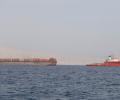
Crude oil prices reached a new record high in futures trade, both domestically and internationally, as escalating military tensions between the US and Iran in West Asia continue to fuel market volatility. Diplomatic efforts concerning the Strait of Hormuz are being closely watched for potential price stabilisation.

Nissan Motor India aims to achieve a fourfold increase in domestic sales, targeting 100,000 units annually, and export another 100,000 vehicles from its Chennai plant by financial year 2027-28 (FY28), marking a significant revival of its presence in the Indian passenger vehicle market.

History may remember Takaichi Sanae not as the leader who simply accelerated Japanese rearmament, but as one who governed during Japan's transition from an industrial-age security model to a post-industrial strategic member of the global order, points out Varun Arya.

India's gold demand saw a 6 per cent year-on-year decline in the April-June quarter of 2026, reaching 131.4 tonnes, primarily due to subdued seasonal sales, increased Customs duty, and Prime Minister Narendra Modi's call to reduce gold purchases, according to a World Gold Council report.
Outward remittances under the Reserve Bank of India's Liberalised Remittance Scheme (LRS) saw a 7.85 per cent year-on-year contraction in April 2026, primarily driven by reduced international travel spending due to global uncertainty stemming from the US-Iran conflict.

Indian stock market benchmark indices, Sensex and Nifty, experienced declines in early trade due to escalating tensions between the US and Iran, which led to a surge in crude oil prices and weak global equity trends.

Indian equity markets experienced a significant decline in early trade, with the BSE Sensex and NSE Nifty dropping, as escalating geopolitical tensions in West Asia and a surge in global oil prices dampened investor sentiment. Track Sensex, Nifty50 movement and key market drivers for May 8, 2026.

The arms trade surplus grew tenfold, reaching $691 million in FY26 from $63 million in FY18.

Indian Hotels Company (IHCL) reported a healthy 14.6 per cent consolidated revenue growth in Q1 FY27, largely driven by a robust 17.6 per cent increase in domestic operations, offsetting geopolitical disruptions. Brokerages anticipate sustained growth, with Motilal Oswal Research projecting 12-14 per cent growth in FY27, supported by strong leisure demand and an asset-light expansion pipeline.

Foreign Portfolio Investors (FPIs) withdrew Rs 49,340 crore (USD 5.16 billion) from Indian equities in June, driven by global risk aversion, a preference for developed markets, soaring US bond yields, and stretched domestic valuations, bringing total withdrawals to Rs 2.7 lakh crore so far in 2026.

India's manufacturing sector experienced a moderation in growth during June, with the HSBC India Manufacturing Purchasing Managers' Index (PMI) falling to 54.2 from 55.0 in May. This slowdown is attributed to softer increases in new business orders and international sales, leading to reduced expansions in buying levels, employment, and output.

Iran's World Cup football team has finally received visas to enter the United States, just days before their first match in Los Angeles.

Understanding the most common mistakes during market downturns can help you protect your investments and stay focused on your long-term financial goals, says Ramalingam Kalirajan

Prime Minister Narendra Modi has begun a six-day tour of the UAE, the Netherlands, Sweden, Norway and Italy to strengthen bilateral relations amid geopolitical challenges. The trip will focus on energy security, trade, and technological cooperation.

Domestic institutional investors (DIIs), driven by the popularity of mutual funds, have emerged as significant stabilising forces for Indian capital markets amidst global volatility and foreign portfolio investment (FPI) outflows, according to Sebi whole-time member Amarjeet Singh.

Prime Minister Narendra Modi has urged states to balance the opportunities presented by artificial intelligence with the need to safeguard against social challenges like cyber fraud and drug abuse. He also warned of the risks posed by El Nino conditions, calling for stronger water conservation measures and emphasising the collective resolve towards a 'Viksit Bharat'.

Gwadar is viewed as a critical pearl in China's maritime strategy as it would give a permanent logistical footprint near an important choke point - the Strait of Hormuz and the oil rich Persian Gulf, explains Commodore Venugopal Menon (retd).

The Asian Development Bank (ADB) has revised down India's GDP growth forecast for fiscal year 2026-27 (FY27) to 6.6 per cent from an earlier 6.9 per cent, primarily attributing the change to elevated energy prices stemming from the Middle East conflict. Despite this moderation, India is still expected to remain the world's fastest-growing major economy.

National Security Advisor Ajit Doval called for decisive action against terrorism and said there cannot be 'double standards' in the fight against it, while addressing an international security forum in Russia.

Modi's comments on underlining the importance of ensuring the safety of seafarers came against the backdrop of growing anger in India over the killing of the three Indian crew members in a US military attack on a merchant ship off the coast of Oman last week.

'The flip side of this is that he won't hesitate to call out India if he thinks its policies are hurting US economic interests or border US foreign policy goals.'

Indian stock markets are expected to remain highly sensitive to geopolitical developments, particularly the US-Iran situation, and crude oil prices this week, with analysts also highlighting the influence of the rupee-dollar trend, foreign investor activity, and upcoming inflation data.

Several Indian real estate companies, including BPTP Ltd and Smartworld Developers, are rethinking or shelving their initial public offering (IPO) plans, which were expected to raise around 15,000 crore, due to weaker housing demand, higher costs, and a more cautious investment climate.
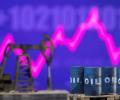
Crude oil prices are projected to fall significantly this year, driven by hopes of a peace deal between the US and Iran, which could lead to the reopening of the Strait of Hormuz, and a notable drop in Chinese demand for seaborne crude imports.
Japan is deepening its defence relationship with India while simultaneously expanding its economic, infrastructure and security engagement with countries around India -- particularly Bangladesh. The result is an emerging Japanese conception of South Asia in which India remains the strategic anchor, but the geography surrounding India is becoming increasingly important, points out Varun Arya.

Dr. Jaideep Arya, Secretary General of World Yogasana and Yogasana Bharat, states that Prime Minister Narendra Modi's support has significantly boosted Yogasana's bid for Olympic recognition. He highlights the efforts to rebrand Yogasana as a competitive sport for younger generations and its accessibility, despite challenges like geopolitical tensions affecting participation.

Morocco's impressive rise in global football is uniquely funded by its vast phosphate reserves, with the state-owned OCP Group investing heavily in national team development. This strategic investment, driven by a royal directive, supports training academies and infrastructure, contributing to the nation's recent successes like reaching the 2022 World Cup semi-finals and hosting the 2025 Africa Cup of Nations. The country's abundant phosphate resources provide a stable economic base for these ambitious sporting endeavours.

Millions of people, including international representatives, are expected to attend the funeral of Iran's Supreme Leader Ayatollah Ali Khamenei in Tehran. His death occurred at the start of the US-Israel war on Iran. US President Donald Trump announced a week-long pause in bombing for the funeral, while India was represented by Governor Syed Ata Hasnain and MoS External Affairs Pabitra Margherita. The event is anticipated to be one of the largest gatherings in Iran's history, with ceremonies delayed due to security concerns.

Indian benchmark indices Sensex and Nifty experienced volatile trade, declining in early deals before fluctuating, as investors reacted to unabated foreign fund outflows and rising geopolitical uncertainties, particularly in West Asia.

Indian stock markets are set to be influenced by developments in US-Iran negotiations, crude oil prices, and foreign investor activity in the upcoming holiday-shortened week, according to market analysts.
